
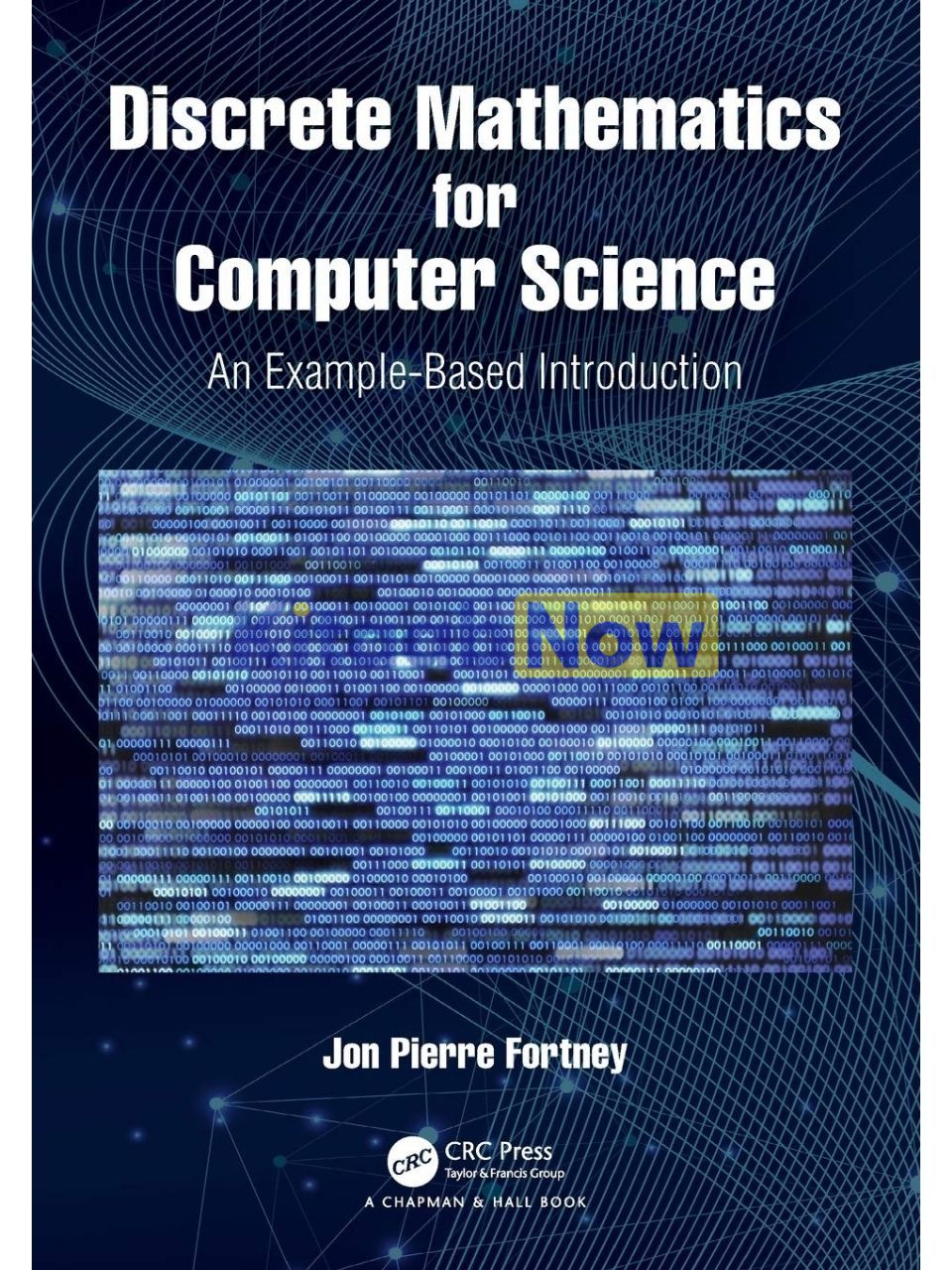
Discrete Mathematics for Computer Science: An Example-Based Introduction
$ 79.64
Retail prices excluding local 15% VATSecure Checkout and Payment Options
Fast, Reliable Delivery
In the detail
- V266ml – H92mm
- 100% glass
- Highly chip resistant
- Dishwasher and glasswasher safe
- Duratuff reinforcement
- Suitable for the service of coffee as well as spirits on the rocks
- Available in a range of sizes, perfect for any occasion
Have any queries?
Learn more about the brand

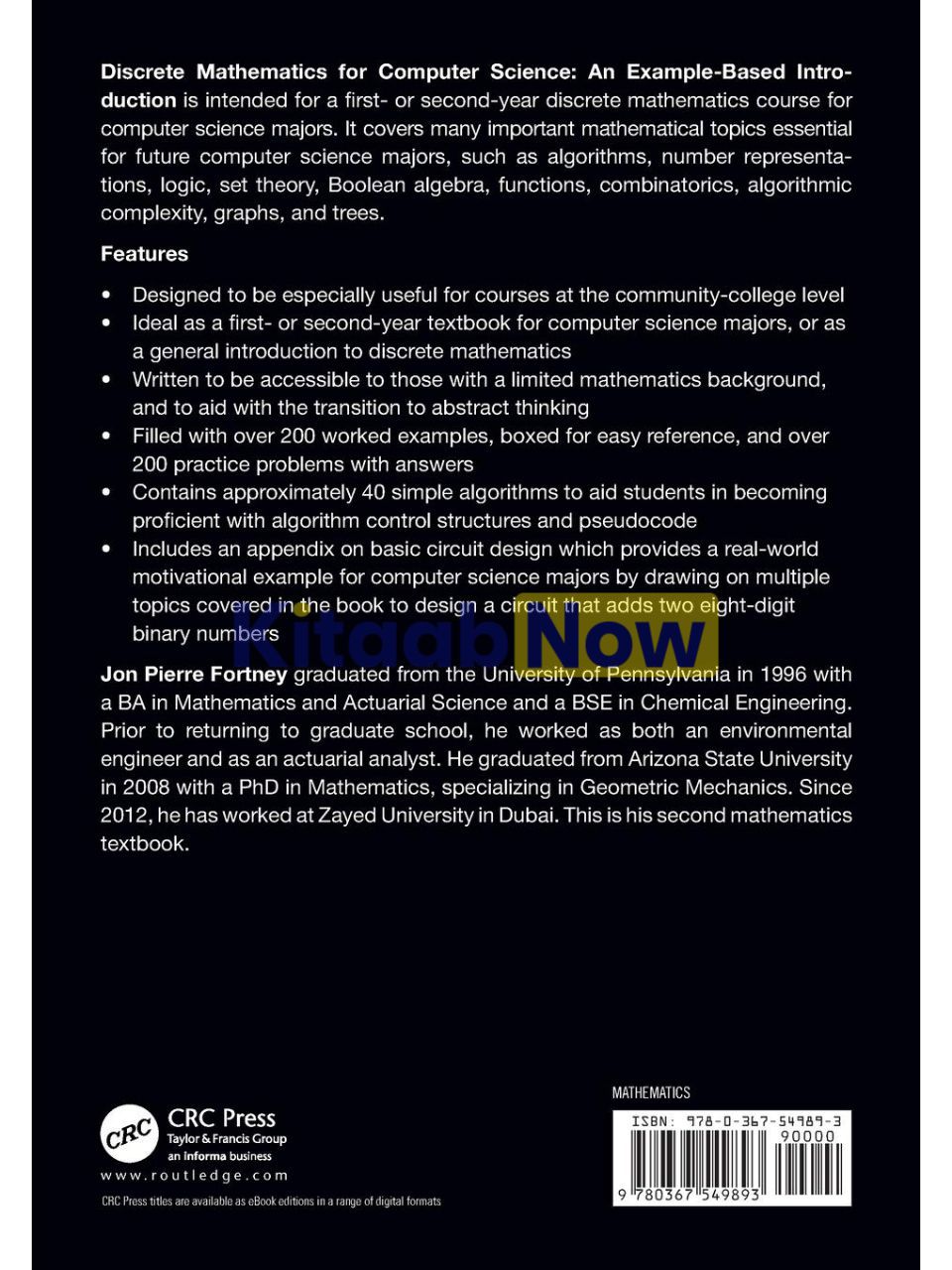
DescriptionDiscrete Mathematics for Computer Science: An Example-Based Introduction is intended for a first- or second-year discrete mathematics course for computer science majors. It covers many important mathematical topics essential for future computer science majors, such as algorithms, number representations, logic, set theory, Boolean algebra, functions, combinatorics, algorithmic complexity, graphs, and trees.Key FeaturesDesigned to be especially useful for courses at the community-college levelIdeal as a first- or second-year textbook for computer science majors, or as a general introduction to discrete mathematicsWritten to be accessible to those with a limited mathematics background, and to aid with the transition to abstract thinkingFilled with over 200 worked examples, boxed for easy reference, and over 200 practice problems with answersContains approximately 40 simple algorithms to aid students in becoming proficient with algorithm control structures and pseudocodeIncludes an appendix on basic circuit design which provides a real-world motivational example for computer science majors by drawing on multiple topicscovered in the book to design a circuit that adds two eight-digit binary numbersTable of Contents1. Introduction to Algorithms.What are Algorithms?Control Structures.Tracing an Algorithm.Algorithm Examples.Problems.2. Number Representations.Whole Numbers.Fractional Numbers.The Relationship Between Binary, Octal, and Hexadecimal Numbers.Converting from Decimal Numbers.Problems.3. Logic.Propositions and Connectives.Connective Truth Tables.Truth Value of Compound Statements.Tautologies and Contradictions.Logical Equivalence and The Laws of Logic.Problems.4. Set Theory.Set Notation.Set Operations.Venn Diagrams.The Laws of Set Theory.Binary Relations on Sets.Problems.5. Boolean Algebra.Definition of Boolean Algebra.Logic and Set Theory as Boolean Algebras.Digital Circuits.Sums-of-Products and Products-of-Sums.Problems.6. Functions.Introduction to Functions.Real-valued Functions.Function Composition and Inverses.Problems.7. Counting and Combinatorics.Addition and Multiplication Principles.Counting Algorithm Loops.Permutations and Arrangements.Combinations and Subsets.Permutation and Combination Examples.Problems.8. Algorithmic Complexity.Overview of Algorithmic Complexity.Time-Complexity Functions.Finding Time-Complexity Functions.Big-O Notation.Ranking Algorithms.Problems.9. Graph Theory.Basic Definitions.Eulerian and Semi-Eulerian Graphs.Matrix representation of Graphs.Reachability for Directed Graphs.Problems.10. Trees.Basic Definitions.Minimal Spanning Trees of Weighted Graphs.Minimal Distance Paths.Problems.Appendix A: Basic Circuit Design. Appendix B: Answers to Problems.Author BiographyJon Pierre Fortney graduated from the University of Pennsylvania in 1996 with a BA in Mathematics and Actuarial Science and a BSE in Chemical Engineering. Prior to returning to graduate school, he worked as both an environmental engineer and as an actuarial analyst. He graduated from Arizona State University in 2008 with a PhD in Mathematics, specializing in Geometric Mechanics. Since 2012, he has worked at Zayed University in Dubai. This is his second mathematics textbook.